As a BSc graduate, are you confused about your future? Well, you are not alone in this, and the reason is an outdated perspective in general. In today’s massive and growing digital economy, Science graduates have various career options to choose from.
They can either go for traditional job roles or opt for modern roles in evolving sectors such as Data Science, Analytics, AI, ML, and Cybersecurity. Reportedly, in 2026, in these promising sectors, the average salary range lies between Rs 9 LPA and Rs 15 LPA.
Among the top jobs after a BSc, data scientist, ML engineer, and cybersecurity analyst are the best and highest-paying opportunities. This blog will take you through roles that are popular after a BSc degree and allow you to understand key factors related to your career.
Top Job Opportunities After BSc: Private and Gov Sectors
Job opportunities for BSc graduates are from some of the most important and future-oriented sectors, offering a promising entry-level income, along with fairer growth possibilities. The other options you can explore are more traditional in nature, such as Lab Assistant or Medical Laboratory Technician (MLT).
Let’s take a look at the following job profiles after a BSc, their average salary, and what these roles are about.
Private Sector Jobs After BSc
After completing the Bachelor of Science course, the following job roles fit into the category of modern roles, with better prospects and a higher salary range. These are more growth-oriented roles and provide an option to look beyond traditional profiles.
(1) Data Scientist
A data scientist's profile is considered adaptive to shifting technology because of the massive rise of the digital economy, making your skills more valuable for companies, as they are heavily dependent on online data.
This role requires you to perform complex data-related tasks, to find patterns from massive and complex amounts of data, and use them to build systems that can predict future trends for the organisation.
Due to the dependency of companies on these critical insights, the data analytics market size in India alone is expected to grow at a massive CAGR of 35.8%, reaching USD 21.29 billion in 2030, compared to 2024 at USD 3.55 billion. (Grand View Horizon Report 2025)
Average Salary: Rs 10.23 LPA
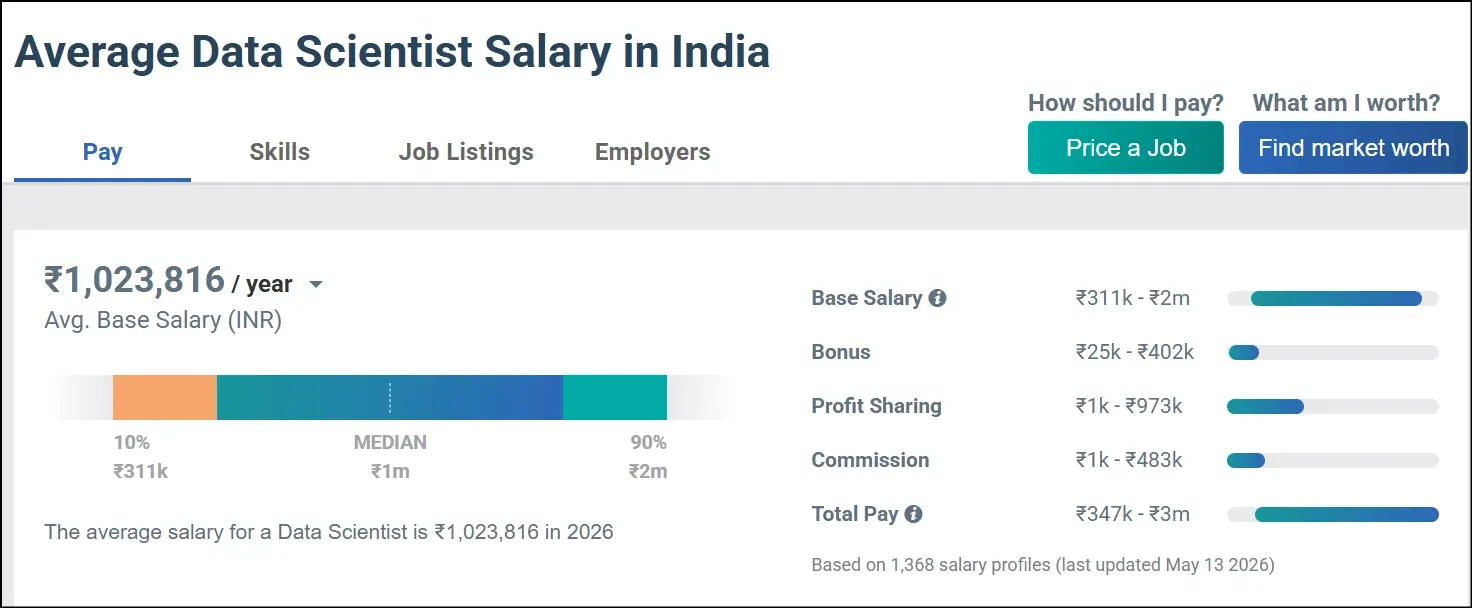
Source: Payscale
Required BSc Specialisation:
- B.Sc in Data Science
- B.Sc Computer Science
Required Skills:
| Python | SQL | Mathematics, |
| Data Visualisation | Big Data | R (Open Source Language) |
(2) Analytics Engineer
In this role, you work with both data engineers and data analysts, where your job is to write code so that everything (raw and messy data) can be arranged in a fully structured way. This way, you help companies with a single and verified information dashboard, which different teams can use to their advantage.
You can work in top MNCs as an Analytics Engineer and expect to build a promising career due to the high future relevance of the analytics industry, which is expected to grow at 32.15% CAGR until 2031, taking its current market value from 108.79 billion US dollars to 438.47 billion. (Mordor Intelligence Report 2025)
Average Salary: Rs 10.9 LPA
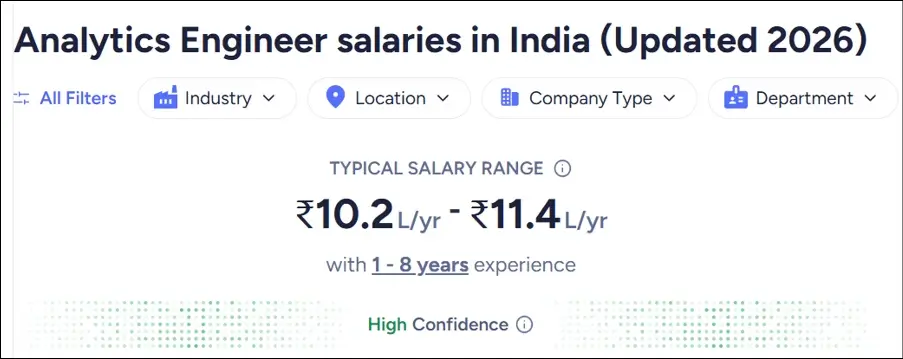
Source: Ambitionbox
Required BSc Specialisation:
- B.Sc in Data Science & Analytics
- BSc in IT
- B.Sc Computer Science
Required Skills:
| SQL | dbt (Data Build Tool) | Python |
| Data Warehousing | ETL/ELT Processes | Tableau, Power BI, BigQuery |
(3) Machine Learning (ML) Engineer
As an ML engineer, your job is to build highly specialised artificial intelligence tools for companies, so that they can be successfully integrated into active software.
Machine Learning job opportunities in the future are expected to boom, with the WEF forum reporting 170 million new jobs in the AI industry. Several BSc specialisations include machine learning-related skills, keeping in mind their future relevance.
ML is a modern and an industry that is expected to witness massive evolution in the near future, offering a promising and highly growth-oriented career.
Average Salary: Rs 10.11 LPA
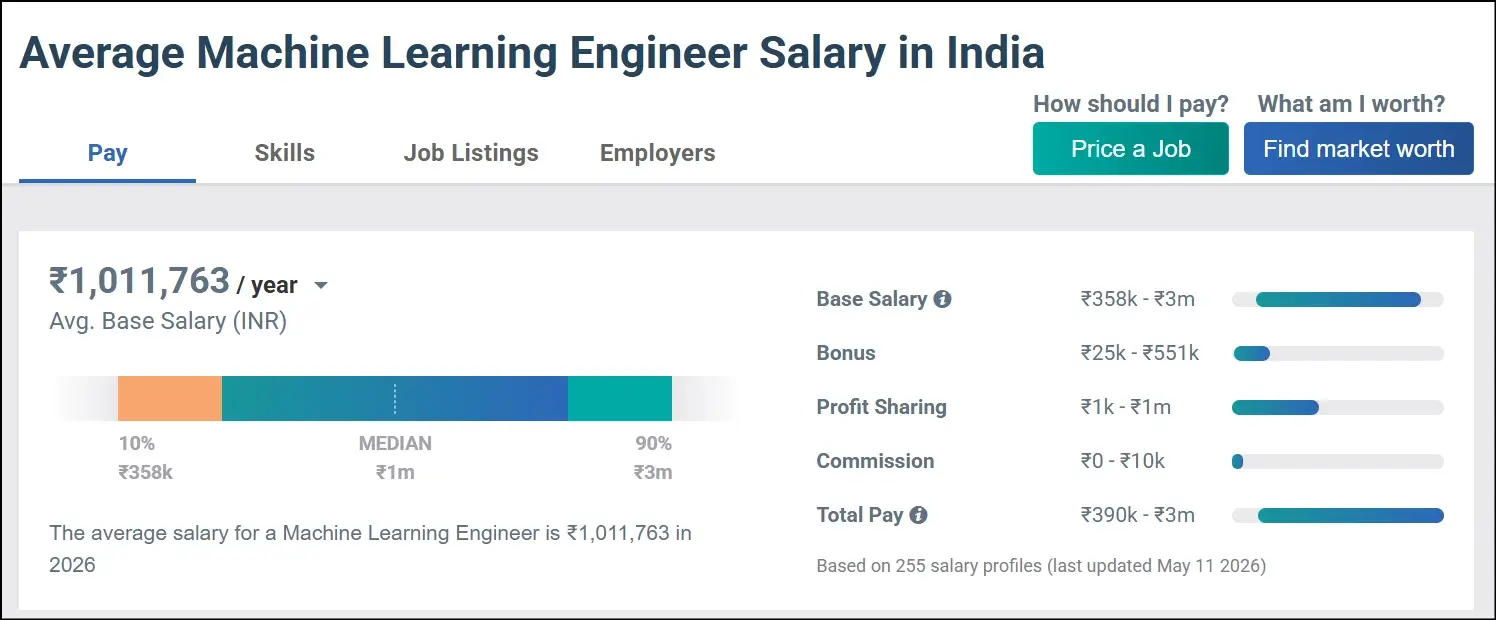
Source: Payscale
Required BSc Specialisation:
- B.Sc in Artificial Intelligence & Machine Learning
- B.Sc Computer Science
Required Skills:
| Python | C++ | TensorFlow, PyTorch |
| Linear Algebra, Calculus | Natural Language Processing | Docker and Kubernetes |
(4) Cybersecurity Analyst
In this role, you are responsible for providing a safe and secure environment for the computer network. Considering the heavily digitally dependent future, MNCs need cybersecurity analysts who can find loopholes within the system that hackers may use, and build a cybersecurity tool to stop any external access to the company’s private data.
Skills you need to learn and hold mastery include how to protect data traffic and use the software (Splunk, IBM) to keep an eye on any suspicious activity. Overall, the importance of a cybersecurity analyst in a company is highly valued, and in the future, companies are expected to invest heavily in the same.
By 2030, as per MarketsandMarkets, the cybersecurity market size is expected to reach up to 353 billion US dollars, taking a massive jump from its valuation of 225 B USD in 2025.
Average Salary: Rs 5.84 LPA
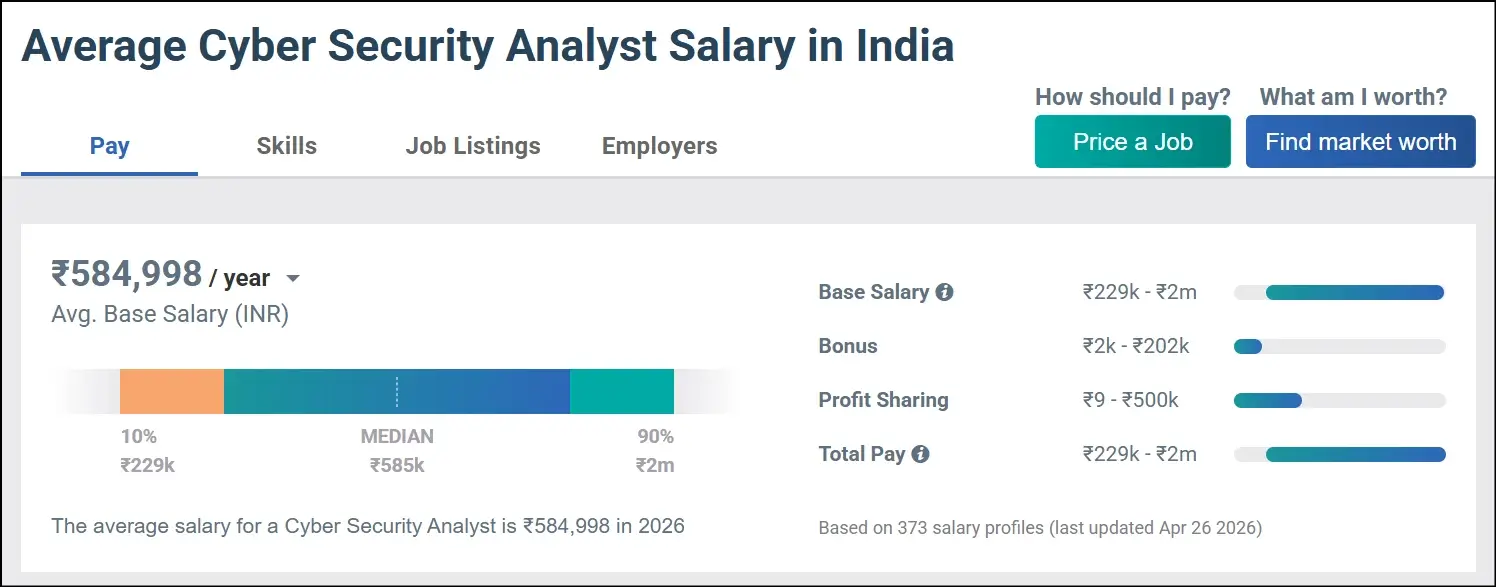
Source: Payscale
Required BSc Specialisation:
- B.Sc in Cybersecurity
- B.Sc in Digital Forensics
Required Skills:
| Network Security Protocols | (TCP/IP, DNS) | SIEM Monitoring |
| Splunk, IBM QRadar | Threat Management | Linux/Unix |
(5) Full-Stack Developer
In this job role, you have to handle both the visible design and the elements of a website, as well as the scene's logic, which makes it functional. This combination of responsibilities is divided into two parts, front-end and back-end, and a full-stack developer is an expert in both.
A full-stack developer role is amongst the most sought-after profiles due to its broad expertise, leading to a promising and high-salaried position. By 2030, the SaaS IT segment, where full-stack developers play a massive role, is expected to touch USD 819.23 billion, from the current 399 billion market value (As per the Grand View Research report).
Average Salary: Rs 7.90 LPA
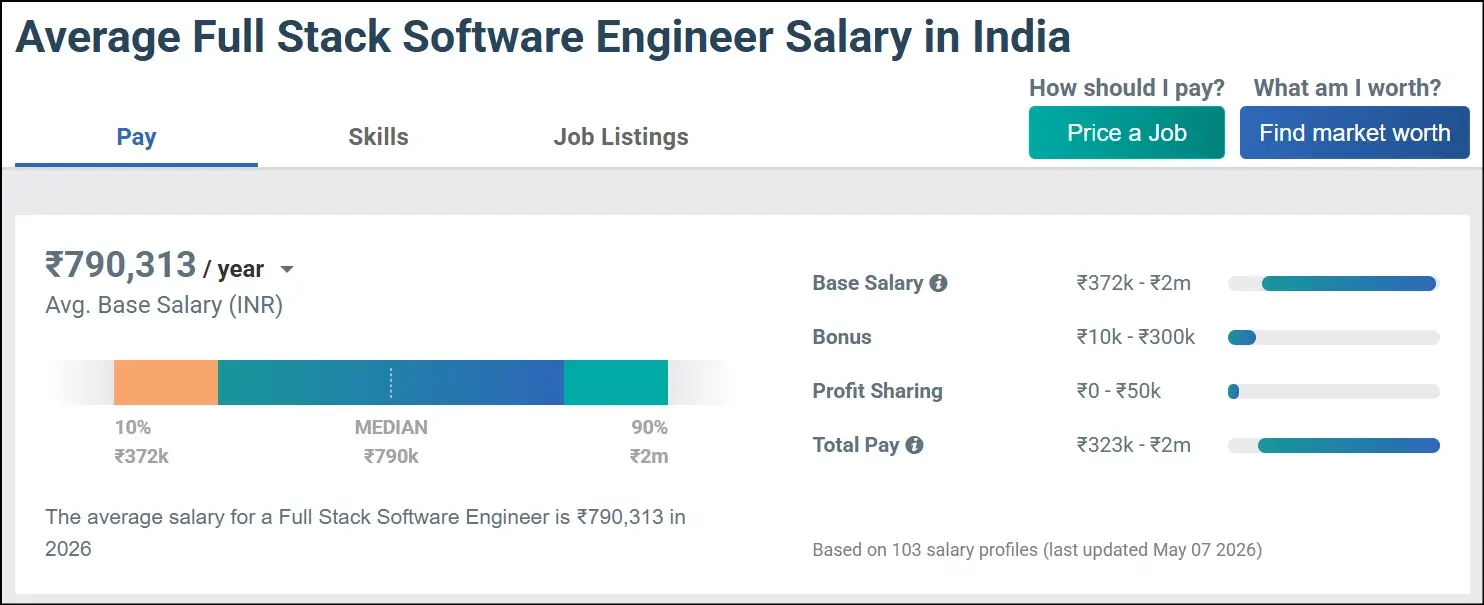
Source: Payscale
Required BSc Specialisation:
- BSc Computer Science (BSc CS)
- B.Sc. Information Technology (B.Sc IT)
Required Skills:
| HTML5 | CSS3 | JavaScript |
| Python (Django/FastAPI) | Java (Spring Boot) | Node.js (JavaScript) |
(6) Bioinformatics Analyst
To become a bioinformatics analyst, you can take a direct route via a BSc in Bioinformatics, where you learn key aspects of computer science and biotechnology. This combination provides you with the opportunity to work for companies in the pharmaceutical, genomics, and AI-driven healthcare sectors.
Again, AI-driven bio sectors are expected to grow exponentially at a CAGR of over 20%, projected to reach 11.4 billion USD (2030) (as per BCCResearch Report). This puts forth a massive opportunity for candidates looking to build their careers in roles that are future-proof.
Average Salary: Rs 5.7 LPA
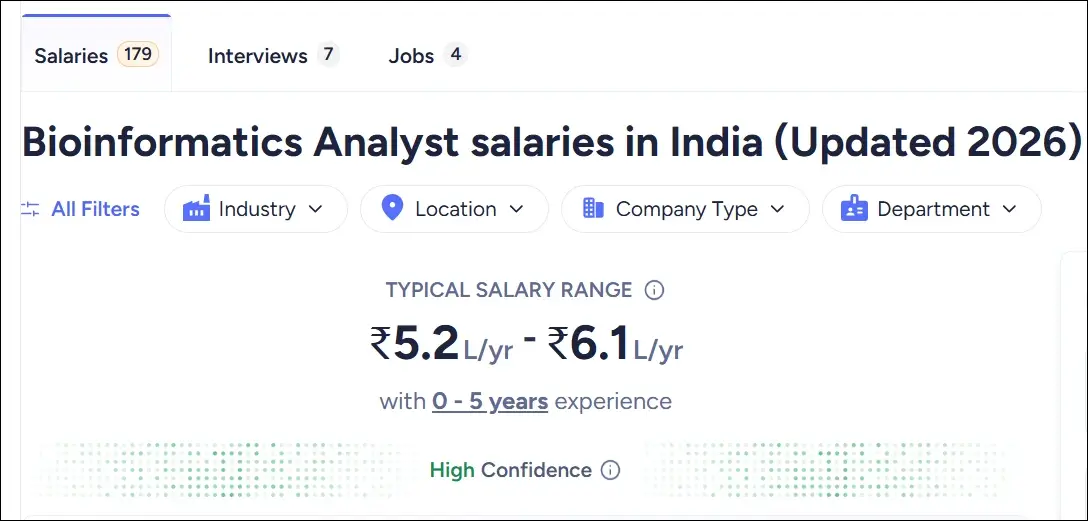
Source: Ambitionbox
Required BSc Specialisation:
- BSc in Bioinformatics
Required Skills:
| Programming | SQL queries | BLAST (for matching DNA) |
| Molecular Biology & Genetics | Next-Generation Sequencing | Linux/Unix |
Traditional Job Roles After BSc for a Stable Career
Jobs such as Lab assistant, clinical research associate, medical laboratory technician, or Quality assurance are some of the most traditional roles for BSc students. These roles have been known for offering a stable career, with steady growth, in both sectors, private and government.
However, for offering better security against job loss situations, the government sector career options for the Bachelor of Science graduates are still amongst the top priorities.
Lab Assistant
The assistant's job is to keep the lab functional by maintaining the equipment, ensuring a clean and testing environment, sample labelling, etc. After a BSc, this is one of the most popular and well-known job roles, and the reason is that it offers a seamless entry point into the professional workforce with minimal barriers.
Base Salary: Rs 2.39 LPA
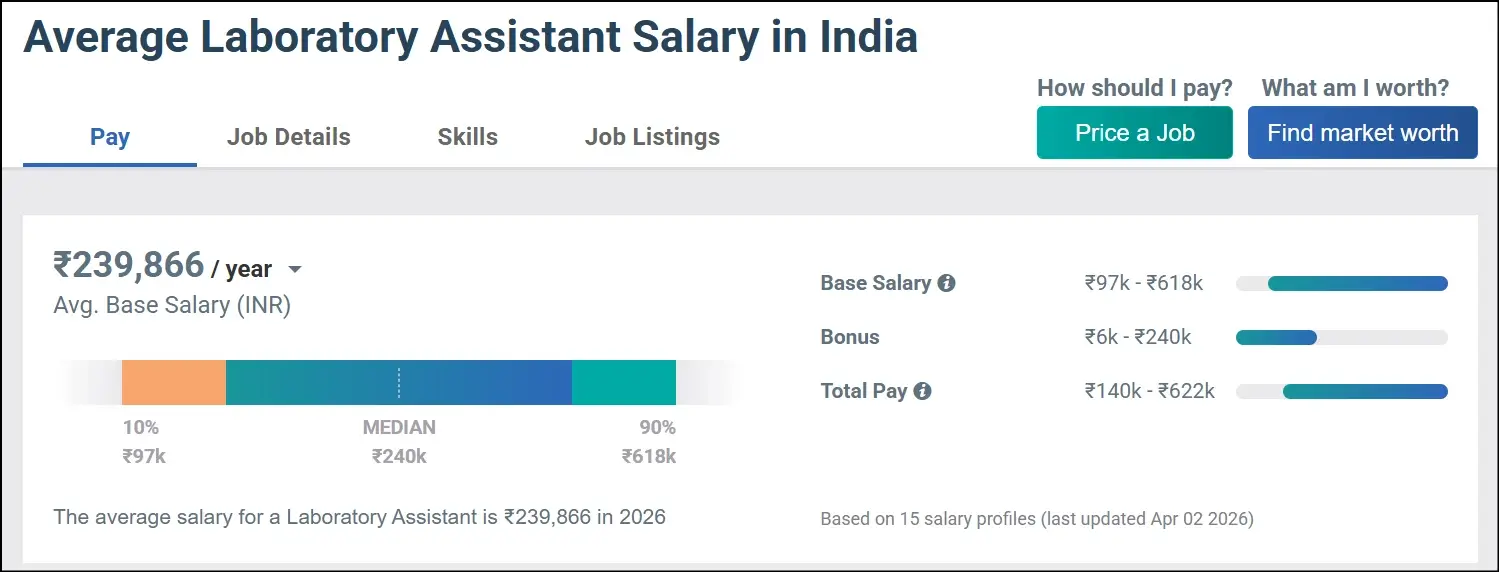
Source: Payscale
Required BSc Specialisation:
- Chemistry
- Physics
- Biology
- Biotechnology
- Microbiology
Required Skills:
| Equipment calibration | Sample Preparation | Data logging |
Clinical Research Associate (CRA)
This job profile is about overseeing medical experimentation on humans, such as drug testing. A CRA is responsible for how the test is being conducted, ensuring that guidelines are followed across the board, and doctors are adhering to the existing medical laws.
Base Salary: Rs 3.95 LPA
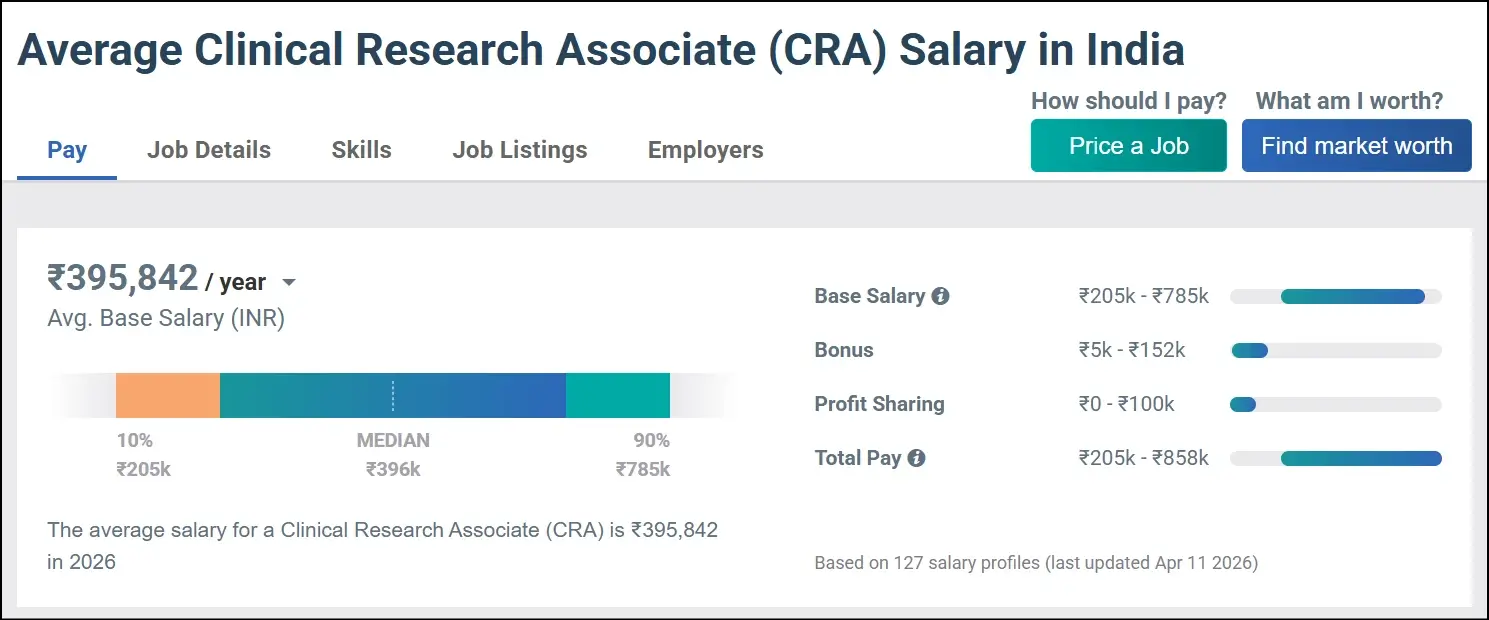
Source: Payscale
Required BSc Specialisation:
- Clinical Research
- Biotechnology
- Zoology
- Biomedical Science
Required Skills:
| Clinical trial monitoring | ICH-GCP guidelines compliance | Data verification and regulatory |
Medical Laboratory Technician (MLT)
An MLT job profile is all about conducting medical tests on patients, so that doctors can use them to prescribe appropriate medicines. This includes drawing blood, conducting urine tests, using microscopes to look at tissue samples, and testing results.
Overall, these traditionally popular job roles offer steadier growth in a career, but the government sector hospital opportunities are still in high demand.
Base Salary: Rs 2.95 LPA
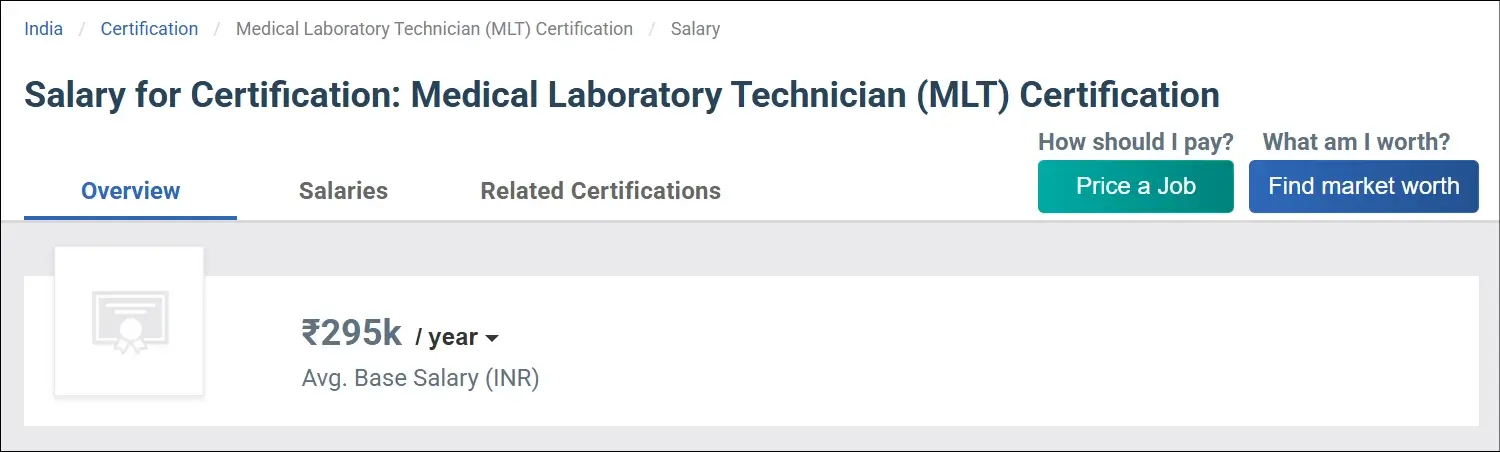
Source: Payscale
Required BSc Specialisation:
- Medical Laboratory Technology
- Microbiology
- Biochemistry
Required Skills:
| Blood Sample Collection | Pathology Testing | Haematology Analysis |
Quality Assurance (QA) Analyst
This role is about making sure the food, medicines, chemicals, and factory cleanliness are as per the quality standards mentioned within the medical industry standard guidelines.
Base Salary: Rs 5.18 LPA
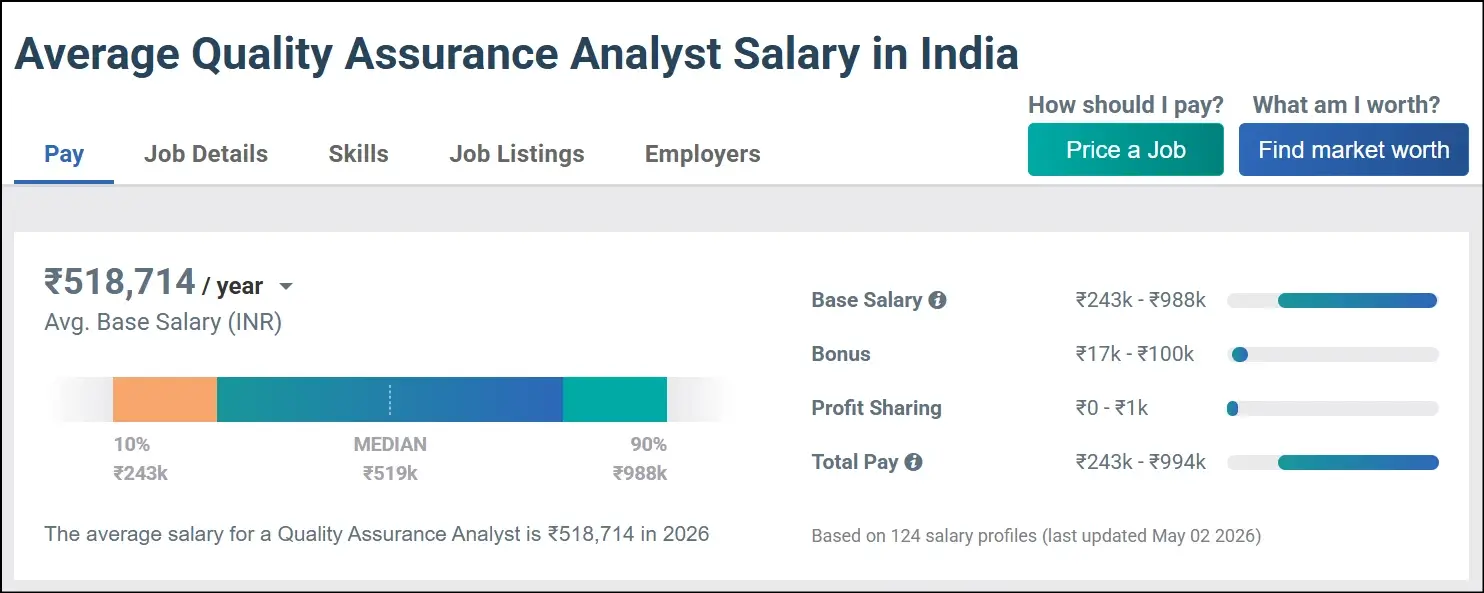
Source: Payscale
Required BSc Specialisation:
- Chemistry
- Biochemistry
- Bioinformatics
- Food Technology
Required Skills:
| Statistical Process Control | GMP/GLP compliance | Auditing & root cause analysis |
Subject Matter Expert (SME)
A subject matter expert job profile is based on the specific science background, in which you can become a subject matter expert. This profession requires writing textbooks, solving complex equations for online study material, checking educational videos for mistakes, and training school teachers.
Base Salary: Rs 11.7 LPA
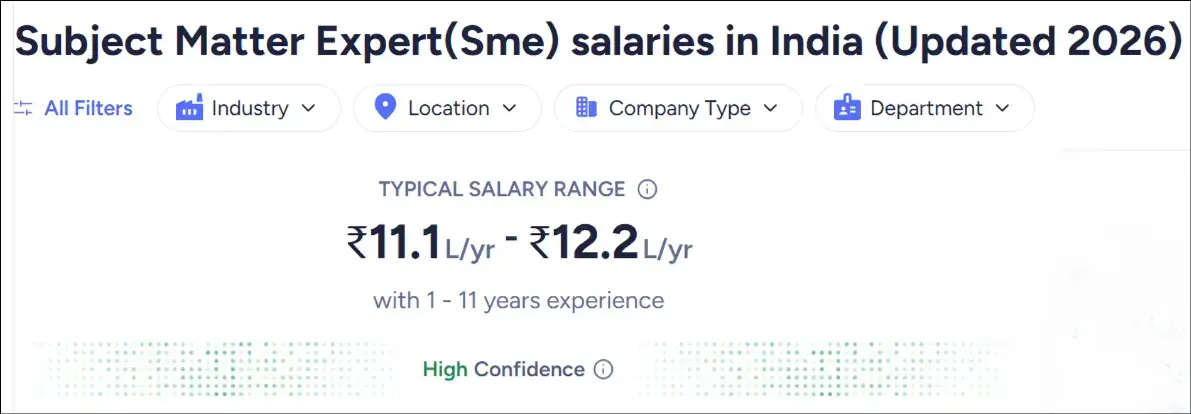
Source: Ambitionbox
Required BSc Specialisation:
- Mathematics
- Physics
- Chemistry
- Computer Science
- Statistics
Required Skills:
| Technical writing | Curriculum Development | Advanced Problem-Solving |
Government Jobs After BSc: Exams and Salary
After a BSc, you can appear for relevant entrance exams for the following government sector job profiles. These are some of the most sought-after positions that provide job security, high allowances, and influence in society.
| Job Profile | Entrance Examination | Salary Per Month (Basic) |
| PSU Jobs (NTPC, ONGC, IOCL, PGCIL) | GATE (Graduate Aptitude Test in Engineering) | Rs 50,000 - 60,000 |
| Civil Services Officer |
| Rs 56,100 |
| Commissioned Defence Officer |
| Rs 56,100 |
| ISRO Scientific / Technical Assistant | ISRO ICRB Standalone Exam (ISRO Centralised Recruitment Board & Technical Interview) | Rs 44,900 |
| DRDO Senior Technical Assistant-B (STA-B) | DRDO CEPTAM Exam (Centre for Personnel Talent Management Entrance Test) | Rs 35,400 |
| Central Government Inspector (Income Tax, Central Excise, Examiner) | SSC CGL (Staff Selection Commission Combined Graduate Level) | Rs 44,900 |
| Junior Statistical Officer (JSO) | SSC CGL (Staff Selection Commission Combined Graduate Level) | Rs 35,400 |
| Probationary Officer (PO) (SBI, IBPS, and Nationalised Banks) | SBI PO / IBPS PO (Common Written Examinations & Interviews) | Rs 48,480 – 56,480 |
| Trained Graduate Teacher (TGT) (Class 6-10) | CTET (Paper II) / State TET followed by recruitment exams (KVS, NVS, DSSSB, or State-level school boards) | Rs 44,900 |
| Post Graduate Teacher (PGT) (Class 11-12) Requires MSc | Direct State Board Recruitment Exams / KVS / NVS / DSSSB PGT Exam | Rs 47,600 |
Source: Ministry of Finance
Note: On top of the basic pay, the actual take-home salary for the aforementioned government roles in India depends on the additional allowances (DA, GA, SA, HRA). Your job location decides the overall gross salary for government employees in the country.
Specialisation-based Job Options After BSc
Post completing your Bachelor of Science degree, you can apply for the following roles. However, the specialisation you pick is critical, as it determines the professional role you can apply for based on the skills you learn.
| BSc Specialisations | Job Opportunities | Average Salary |
| Computer Science (CS) |
|
|
| Data Science / Analytics |
|
|
| Artificial Intelligence & Machine Learning (AI-ML) |
|
|
| Cyber Security & Digital Forensics |
|
|
| Biotechnology |
|
|
| Nursing |
|
|
| Medical Laboratory Technology (MLT) |
|
|
| Statistics / Mathematics |
|
|
| Agriculture |
|
|
| Food Technology |
|
|
The salaries mentioned above in the table have been sourced from AmbitionBox.
Will these Jobs be Available After BSc Online?
Yes, you can apply for various job opportunities after your online BSc degree. However, traditional BSc specialisations in practical fields such as physics, chemistry, biology, nursing, medicine, and agriculture are not possible online.
Thus, for only modern specialisations such as Data Science & Artificial Intelligence, Computer Science, an online BSc degree is completely valid and opens the door to some of the most trending and future-ready job opportunities.
Since these specialisations are UGC-DEB-approved to be delivered in online mode, your online BSc Course in Data Science, Computer Science, or AI/ML holds equal value to its counterpart version (on-campus and traditional).
With 100% online learning mode, students are offered multiple benefits such as a much lower fee structure, direct admission, a convenient learning experience, 24/7 e-library access, and guidance from reputed faculty from online universities.
These UGC-entitled online universities follow mandatory guidelines and ensure the credibility of the online assessment through webcam-based proctoring.
Conclusion
Your BSc degree offers multiple job opportunities for its students, enabling them to secure their future in various modern and traditional industries. While modern job profiles are good for growth-oriented sectors, traditional choices offer more steady and secure profiles in government sectors.
Overall, the choice is completely yours, which way to go. If you have an interest in preparing yourself for high-growth opportunities in AI, ML, and similar industries, then the reward in these industries is high and promising.