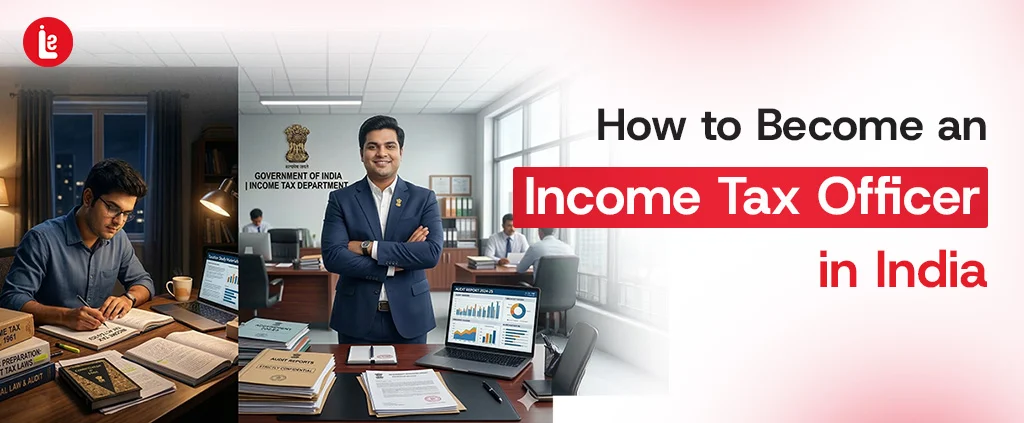
Do you also get forced by your parents to prepare for a government job? Well, many of us have been there at that stage in our lives, and honestly, most of us have even regretted not listening to them! Just like many hyped government job profiles, an ITO (Income Tax Officer) post is also quite popular among Indians.
The problem with government exams is not always the competition. Often, the complexity of the process makes many aspirants step back from applying. In this blog, we will be discussing the complete details on how to start your journey to become an ITO in India. For that, we have covered the exams that you need to prepare for, the minimum qualification you need, and the entire application process to apply for these exams.
Give it a read to take the first step to becoming an Income Tax Officer journey!
Who Is an Income Tax Officer?
To start with, let's first understand what an ITO is. What are his roles and responsibilities?
An Income Tax Officer (ITO) is a Group ‘B’ officer in the Income Tax Department of India, working for the Central Board of Direct Taxes (CBDT) under the Ministry of Finance.
Basically, an ITO makes sure everyone follows income tax laws and doesn't cheat on their taxes. They check income tax returns from people, businesses, and groups to confirm taxes are paid correctly and on schedule.
What an Income Tax Officer Does:
- Checks income tax returns closely
- Sends notices if there are mistakes or failures to follow the rules
- Do surveys and inspections for tax cases
- Looks into tax cheating
- Deals with tax refunds, fines, and appeals
- Helps senior officers with legal and money stuff
Where They Work & What Authority They Have
Income Tax Officers can be found in:
- Offices that handle assessments
- Investigation teams
- TDS (Tax Deducted at Source) departments
They are allowed by law to ask questions and do inspections based on the Income Tax Act, which makes their job important and powerful.
Why This Job Is Important
Income Tax Officers are key to:
- Making India's tax system stronger
- Keeping taxes fair
- Helping the country grow by collecting taxes legally
Because of all this, it's a respected and important job, so lots of people want to do it.
Eligibility Criteria to Become an Income Tax Officer in India
So, you want to be an Income Tax Officer (ITO) in India? Here's what you need:
1. What You Need to Study
- You need a bachelor's degree in any stream from a UGC-recognized university.
- If you're wrapping up your last year, you can still apply.
- Online degrees are cool, as long as they're UGC-DEB-approved.
- You don't need a special major or anything.
2. How Old Can You Be?
- The youngest you can be is 18.
- The oldest is 30.
But hey, there are exceptions!
- If you're SC/ST, you get up to 5 years extra.
- OBC folks get 3 years.
- PwD and ex-military people get even more, depending on the rules.
3. Where Are You From?
You gotta be Indian to apply for income tax department jobs.
4. Are You Medically Fit?
- You need to be healthy enough to meet the standards.
- Nothing too big, just normal health and eyesight.
5. Anything Else?
- No experience needed.
- Male and Female are both good to go.
- You need to pass the SSC CGL or UPSC Civil Services Exam – no way around that!
Exams Required to Become an Income Tax Officer
So, you wanna be an Income Tax Officer (ITO) in India? You'll need to pass some tough government exams. There are basically two ways to get there, depending on how high you want to climb.
1. SSC CGL Exam (The Main Way)
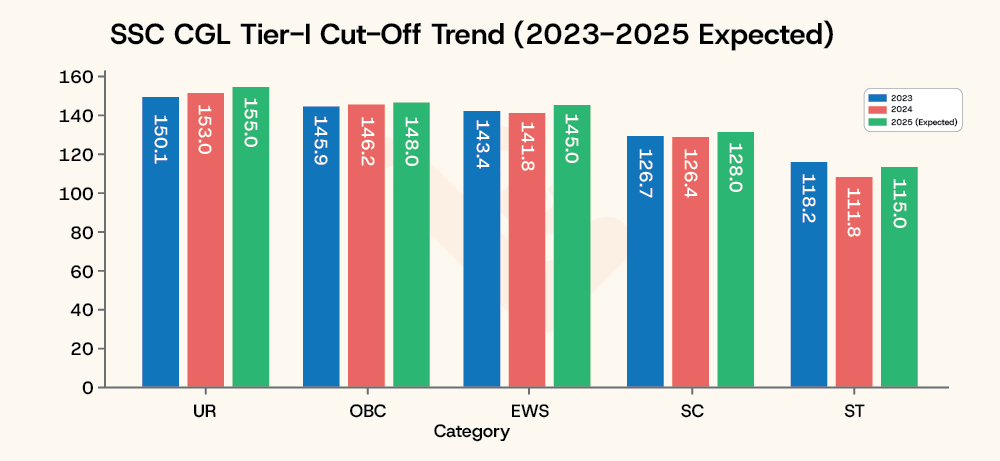
The Staff Selection Commission – Combined Graduate Level (SSC CGL) exam is the usual way to become an Income Tax Officer.
Post you get:
- Income Tax Officer (ITO)
- A Group ‘B’ job in the Income Tax Department.
Who can apply:
- Anyone with a bachelor's degree.
- Usually, you need to be under 30 (but there are exceptions).
How it works:
- First, there's Tier I (a multiple-choice test).
- Then, Tier II (another multiple-choice test).
- After that, they check your documents and do a medical test.
- You get picked based on your scores and the job you want.
2. UPSC Civil Services Exam (Another Way)
You can also become an Income Tax Officer through the Indian Revenue Service (IRS – Income Tax) by acing the UPSC Civil Services Exam.
Post you get:
- IRS Officer (Income Tax)
- This is a higher-up job than the SSC ITO.
How it works:
- First, you take a preliminary exam.
- Then, there's a main exam.
- Finally, you have a personality test (an interview).
This way is harder, but you can move up faster to the senior roles.
Which Exam is Best for You?
Go for the SSC CGL if you just want to be an Income Tax Officer.
Pick the UPSC CSE if you want to be in charge at the Income Tax Department.
The main thing to remember is that you can't just walk into the job. You need to pass either the SSC CGL or the UPSC Civil Services exam to become an Income Tax Officer in India. If you plan well and study hard, you can do it!
SSC CGL and UPSC Applicants Data
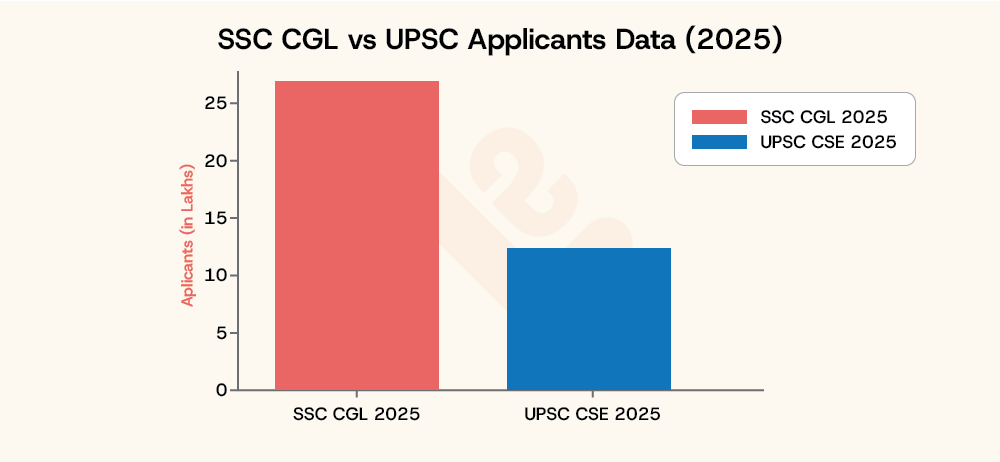
Before applying for these exams, you must first know the number of applicants you are going to compete with.
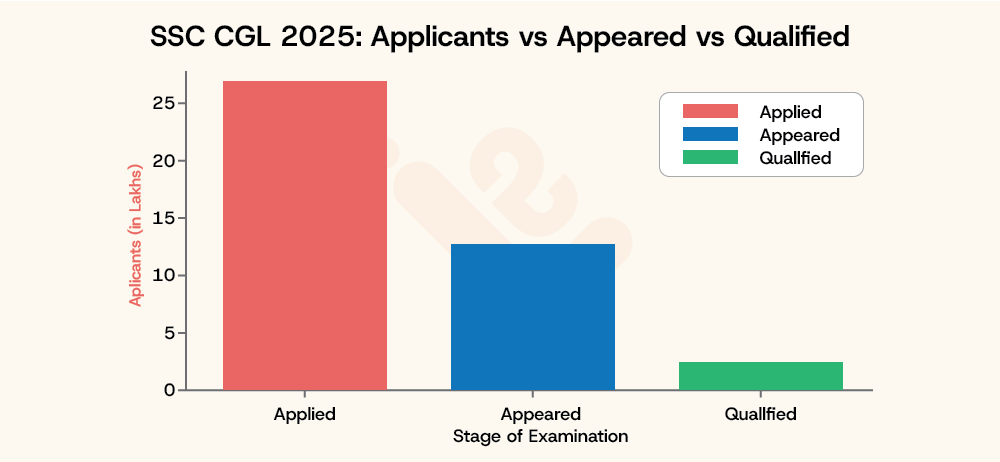
Starting with the Staff Selection Commission (SSC) Combined Graduate Level (CGL) exam, over 28 lakh (2,815,445) applications were received for it in 2025. Now, here is the bifurcation of vacancies and other elements for this exam:
Vacancies: 14,582
Candidates appeared in the Tier-1 examination: 13.5 lakh
Candidates qualified for Tier-2: 1.30 lakh+
Competition Ratio: ~193 candidates per vacancy
For UPSC CSE 2025, the following data has been recovered based on official results and exam trends.
Vacancies: ~979 posts
Candidates Applied: Approximately 12.5 – 14.5 lakh for UPSC CSE 2025 (Prelims).
Candidates Appeared for Prelims: ~5 – 7.5 lakh
Candidates qualified for the UPSC Mains 2025: 14,161
Candidates qualified for the Interview stage: 2,736
Even with millions applying, only a very small percentage (~0.2 % or less) make it to interviews, underlining its legendary competitiveness.
How to Prepare for the Income Tax Officer Exam: Proven Strategy
Here’s how to get ready for the main exam for an ITO post, SSC CGL. The same steps can be followed for the UPSC IRS exam as well. You just need to plan the study part as per the syllabus.
Basically, you need a good plan, practice a lot, and really get the main ideas down. Most people take this exam through the SSC CGL, so you should really focus on what's on the test and make sure you don't waste time.
1. Know the Exam Inside and Out
Before you even start, make sure you totally get what's on the exam:
- Tier I: Thinking Skills, Math, English, General Knowledge
- Tier II: Math Skills, Thinking Skills, English, General Knowledge, Computer Stuff
Knowing the topics means you won’t waste energy on stuff that isn't even on the test.
2. Create a Study Plan That Works
Having a plan that makes sense will get you studying often.
A Good Way to Split Up Your Day:
- 2 hours: Math
- 1.5 hours: Thinking Skills
- 1.5 hours: English
- 1 hour: General Knowledge and What's Happening Now
Change this up based on what you're good at and what you struggle with.
3. Spend Time on What Gets You the Most Points
To get the best score:
- Math: Basic Math, Algebra, Charts, and Graphs
- Thinking Skills: Brain Teasers, Logic, Series, Codes
- English: Words, Grammar, Reading
- General Knowledge: Facts + What's Been Going on (for the last 6–8 months)
4. Take Practice Tests All the Time
- Practice tests are super important.
- Start by testing yourself on each section early.
- Once you've covered everything, do full-length tests.
- Look at every test to see where you need to improve.
Try to do 2–3 full tests each week in the last few months.
5. Get Your Foundation Strong
Understanding the main ideas is more important than quick tricks:
- Go over the formulas every day.
- Do math problems to get faster.
- Be correct first, then worry about speed.
6. Get Good at Using Your Time
The SSC CGL exam has a time limit. Here’s how to deal with it:
- Give yourself time limits for each section when you practice.
- Don’t spend too long on one question.
- Do the easy stuff first.
7. Keep Up with What's Happening
Read:
- News summaries every day
- Current events reports each month
- The Budget, what the government says about the economy, and big government plans
8. Always Review and Check Your Work
Going over things again is how you remember them:
- Review everything each week.
- Review the whole syllabus each month.
- Keep notes on formulas, rules, and facts.
9. Take Care of Yourself
A clear head does better:
- Get 7–8 hours of sleep.
- Take breaks often.
- Stay sure of yourself and keep going.
How Long Should You Study For:
- If you're just starting: 8–12 months
- If you've tried before: 4–6 months
Passing the Income Tax Officer exam isn't just about studying a lot; it's about studying smart. If you have a good plan, practice hard, and check on yourself regularly, you can get a great score.
Skills Required to Become an Income Tax Officer
Becoming an Income Tax Officer (ITO) means passing the test, but that's just the start. You'll need good analytical skills, honesty, and hands-on abilities to deal with tricky money and law situations.
1. Thinking Clearly and Logically
ITOs always look at money info, tax forms, and how money moves around. Good thinking skills are useful for:
- Spotting things that don't add up in what people say they earn
- Finding tax dodgers and weird money stuff
- Understanding cases based on facts
2. Knowing About Taxes and Money
You'll learn a lot about taxes on the job, but it helps to know the basics of:
- Tax laws
- How money statements work
- Bank stuff and accounting ideas
3. Paying Close Attention
Small mistakes on tax papers can cause problems. An ITO needs to:
- Check documents carefully
- Make sure tax rules are followed
- Avoid errors and messing up how things are done
4. Being Honest and Ethical
This job trusts you a lot. You need to be moral to:
- Stay fair and open
- Keep private money info safe
- Say no to pressure
We already have enough corrupt ITOs in India! There is a high need for the honest ones for the survival of our country!
5. Talking Well
You have to be clear when:
- Writing official papers
- Telling taxpayers about tax stuff
- Working with bosses and lawyers
6. Knowing the Basics of Computers
Since things are getting digital, an ITO should know:
- Online tax sites
- Digital files
- Basic data tools and office programs
7. Fixing Problems and Making Choices
ITOs often face hard cases that make you:
- Take the right calls at a faster pace
- Find doable answers that follow the law
- Stay calm and think straight when stressed
Getting these skills and studying for the test helps you pass and do well as an Income Tax Officer.
Income Tax Officer Salary in India 2026 (Pay Scale + Allowances)
So, in 2026, an Income Tax Officer (ITO) in India gets paid based on the 7th Central Pay Commission (CPC) rules. The pay includes a base salary, plus allowances and other perks, which makes it a pretty good deal for a government job.
An Income Tax Officer makes more than some other people in similar government jobs because of the pay scale and extra allowances. If you're working in a big city, you might take home even more money. Plus, your pay goes up each year and when you get promoted.
Let’s understand the components of an ITO salary in India recruited through the SSC CGL.
| Component | Approx. Value |
| Basic Pay | ₹44,900 |
| Dearness Allowance (DA) | ₹18,000 – 22,000 |
| House Rent Allowance (Metro) | ₹10,000 – 12,000 |
| Transport & Other Allowances | ₹5,000 – 8,000 |
| Gross Salary | ₹80,000 – 95,000+ |
| In-Hand Salary (Monthly) | ₹70,000 – 85,000 (after deductions) |
Note: Actual figures depend on posting city, DA percentage, tax deductions, and personal factors.
Allowances & Benefits
Income Tax Officers receive additional allowances and perks, such as:
- Dearness Allowance (DA): Adjusted biannually
- House Rent Allowance (HRA): Higher in X-cities
- Transport Allowance (TA)
- Medical benefits & Pension under NPS
- Leave Travel Concession (LTC)
These extra allowances significantly enhance the overall compensation package.
Salary Growth Over Time
With promotions and experience, the salary increases substantially:
| Role / Level | Pay Level (7th CPC) | Typical Salary Range (Monthly) |
| Income Tax Officer | Level 7 | ₹70,000 – 85,000+ |
| Assistant Commissioner (IRS - UPSC route) | Level 10 | ₹90,000 – 1,10,000 |
| Deputy / Joint Commissioner | Level 11–12 | ₹1,10,000 – 1,40,000 |
| Commissioner & Above | Level 14+ | ₹1,60,000 – 2,25,000+ |
Senior positions, especially through the UPSC IRS route, earn more.
Career Growth & Promotion Path of an Income Tax Officer (ITO)
Since you are planning to join the income tax department as an ITO, you must get a clear understanding of what your career will look like in the long run. For that, you must know the higher job roles in the department, how to apply for them, and what to expect from them in terms of monetary benefits.
Thus, after you have joined as an Income Tax Inspector, you can get promoted to higher roles with time in the same department.
Promotion Hierarchy for an Income Tax Officer (ITO)
| Rank / Designation | Pay Level (7th CPC) | Annual Package (Approx.) | Years of Service (Typical) | Departmental Exam |
| Income Tax Officer (ITO) | Level 7 | ₹7 – 9 LPA | Entry Level | Not Required |
| Assistant Commissioner of Income Tax (ACIT) | Level 10 | ₹10 – 12 LPA | 5 – 7 years | Required |
| Deputy Commissioner of Income Tax (DCIT) | Level 11 | ₹13 – 15 LPA | 10 – 12 years | May be Required |
| Joint Commissioner of Income Tax (JCIT) | Level 12 | ₹16 – 18 LPA | 14 – 16 years | Not Mandatory |
| Additional Commissioner of Income Tax | Level 13 | ₹18 – 22 LPA | 18 – 20 years | Not Required |
| Commissioner of Income Tax (CIT) | Level 14+ | ₹22 – 26 LPA+ | 20+ years | Not Required |
Best Degrees for Aspiring Income Tax Officers
Since the minimum qualification to apply for the SSC CGL or UPSC exam is a bachelor’s degree, most applicants start late for the ITO job preparation. Also, those who have started the prep right after 12th find it difficult to manage both a regular bachelor’s degree and exam preparation at the same time.
Thus, the better and smarter way to go for it is to opt for an Online Bachelor’s degree from a UGC-recognized university. This way, you will not have to follow the hectic college schedule for daily attendance and still get a UG degree, which is completely valid.
However, there are certain things that you need to keep in mind before choosing an online degree:
- UGC-DEB Approval: When picking an online degree, make sure it's UGC-approved. This is super important because only these degrees count for stuff like SSC & UPSC exams, government jobs, and future studies in India. You can usually find the list of such universities on the UGC-DEB site.
- Acceptance for Government Exams: For government job dreams like becoming an Income Tax Officer, double-check that SSC, UPSC, and other big agencies will accept the degree. Good schools will tell you straight-up if their degrees work for government exams. FYI, online degrees from the right places are seen just like regular degrees.
- University Credibility: Look into NAAC scores (aim for A or higher), where the university ranks, how long they've been around, and if any alumni are doing big things in government or companies. A solid online university name can help your rep.
- Relevant & Updated Curriculum: Don't just look at the degree title. Check out the syllabus to see if it's up-to-date, has hands-on subjects (like finance, data stuff, law, or IT), and if it gels with what you need to know for those tough exams. A good syllabus can cut down on extra tutoring.
- Flexibility & Support System: Make sure the program lets you watch recorded and live lectures, has chill exam times (online), and lets you learn at your own pace. This is a lifesaver if you're working or prepping for other exams.
Top 5 Online UG Degrees to Start Your ITO Career
Here are the top 5 online bachelor’s degree options that are UGC-DEB-approved to be delivered in online mode. These programs help in exam preparation as they cover similar topics in the curriculum.
| Online UG Degree | Key Topics Covered |
| Online B.Com | Financial Accounting, Direct & Indirect Taxation, Auditing, Cost Accounting, Business Law, Economics |
| Online B.Com (Accounting & Finance) | Advanced Accounting, Income Tax, Corporate Accounting, Financial Reporting, Auditing, Cost Management |
| Online BA (Economics) | Micro & Macro Economics, Public Finance, Fiscal Policy, Indian Economy, Statistics, Economic Development |
| Online BA (Legal Studies / Law-related) | Business Law, Constitutional Basics, Income Tax Law, Corporate Law, Legal Procedures, Compliance |
| Online B.Sc (Statistics / Data Analytics) | Statistics, Data Analysis, Probability, Excel, Basics of Programming, Business Analytics |
Final Thought
At last, the only thing that matters is your determination and passion to become an income tax officer. If you are serious about it, you must meet the eligibility criteria and crack the competitive exam for it. The results might not exactly match your expectations on the first attempt. So what, start again, plan your schedule, and avoid the mistakes you made in the first attempt.
Moreover, planning for an online degree would be highly beneficial for you in this journey. It will not only make you eligible for the ITO post but also act as a backup option for you!